Thursday, 17 November 2011

Final idea: "Walking the Dog"

Treatment
Walking the dog
A man is walking his dog in the countryside, when his dog runs off he really shouts at the dog to come back, which he does, whilst still shouting he realises the dog has something in his mouth, the dog runs off again. Intrigued, he chases his dog relentlessly, but cannot catch him, the dog is teasing him; after what seems like hours of the man chasing his dog he finally catches him and realises that he has a lottery ticket in his mouth he winces and starts to get excited, rings his wife from the field and says I have found a lottery ticket, don’t get too excited but I think we have won…. The wife stays calm and tries not to get too excited and logs onto the internet to look at last night’s lottery numbers she reads them out slowly as he is agreeing with each number… as they agree the final number the wife screams “I CANNOT BELIEVE WE HAVE WON THE LOTTERY” and is getting very excited on the other end of the phone as he realises he has found a lottery ticket which is dated for last week, and they have won nothing, he breaks it to his wife and they hang up the phone, and he realises the dog has run off again. He runs off in pursuit of the dog as the screen fades out and the titles are introduced.

Tuesday, 15 November 2011

How my ideas have changed...

I cannot decide whether I want to do a Mockumentory as I feel it would be hard for me to find the actors, so I am in the process of deciding between 2 ideas; A Mockumentory and A short film containing Irony and Black Humour.

Use of Narration

Narration can be a really important part of Short film, as it can help the audience to understand what is going on, as it can be hard to communicate a storyline in a short film to help the director get across what they are trying to say, and to help the audience understand what is going on.
For my AS piece I used narration in the opening 2 minutes of "The Life of Emily Banks" to engage the audience with my character, she introduced herself and her background that we understood her as a person, as I thought that this was a really good way of enticing my audience by familiarising themselves with my character, she was letting them into her life. We also see narration in the film "Mean Girls" at the beginning so that we can understand where shes from, and that she has moved to America from Africa, so it gives an instant insight into her life so that we already know what is going on before the film starts, it was a really good way of communicating what was going on so we can connect with her, and also engages the audience by adding some comedy.
Narration is used in many feature length, short films, TV series as it is another tool which is used for Breaking Fourth Wall and can add some comedy and personality to a programme or film.
Mary Poppins PosterNarration has changed a lot over the years, for example 1950s Radio and TV narration with a very proper English accent, as at the time that was what was seen as proper and you would rarely hear any accents on TV, Film or Radio, another example of this is the film "Mary Poppins", The Banks family are very upper class and Mary Poppins, their Nanny all have very proper English accents but Bert, the Chimney sweeper, has a very Cockney accent, this is typical of this era as it was seen as very "Working Class" to have any accent that wasn't prim and proper.
Times have changes and now we see a lot of regional identity in narration, as it is now understood that a narrator has to be clearly spoken, yet doesnt have to be really Britsh for the audience to understand what they're saying. For example the Big Brother narrator, Marcus Bentley, has a strong Geordie accent which is one of the most recognisable voices in the UK, even to people who don't watch Big Brother. accents are a really good way of getting some character into the medium.


Ideas so far..

As a team Me, Nicole Rance, Ryan Cole and Steven hubbard decided to get together and make something thats short and comical to share our ideas....

Thursday, 3 November 2011

How are short films consumed?

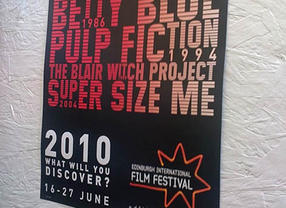
Short Films can be consumed in many different ways; it is unlikely that you would go to the cinema and pay to see a short film, unless you see sequence of them. If you were interested in watching short films you are more likely to visit a short film festival, which are not uncommon, but are very small scale events where people submit their work to be watched by an audience who have a particular interest in short films for example the Edinburgh Short Film Festival. Short films are usually an aspiring directors passage to making feature films, as someone making a film by themselves would not have sufficient funds to pay for equipment, or actor/esses, time or editing equipment to pay to make a 2 hour long film, short films are a lot easier to make as they are... short! They do not require the same amount of editing, planning, filming, equipment and so on, although it is unlikely you could be a famous director and make lots of money by making short films, hence, they are a passage, and usually used for recognition.
Some people submit their work to online forums such as The BBC Film Network just for recognition of a piece of work they are particularly proud of and feel like they want to share it with the world. The BBC Film Network has hundreds of short films from part time directors who like to make and edit short films in their spare time as a hobby, and students who would like a wider audience on their work, it is a prime example of how short films are consumed.
Another example is the short and quirky animated short films we see at the beginning of a Pixar feature film, like the birds on the wire- "For the Birds", and the lamp squashing the ball- "Luxo" these are all popular short films and are just something that make people laugh before the real film, but if you asked somebody about them they would recognise what you are saying and know what you're talking about, but not necessarily see it as a Short Film, yet it is.

The difficulties of telling the whole story in a few minutes...

It is difficult to tell a whole story in under 5 minutes, because you have to introduce the characters and make the audience engage with them in a short period of time, as well as telling the whole story and making it clear to the audience. In feature length films they have 2 hours to do all of these things, so trying to comprise all of these factors in a short period of time poses many difficulties.


The main difficulty is Characters engaging with the audience or "breaking fourth wall". Meaning breaking down the imaginary wall between the audience and the characters, the other 3 walls being their stage or onscreen set. Breaking the fourth wall is a metaphor for breaking down the boundaries between characters and the audience so they can fully engage and the audience can fully see into the characters life and understand what is happening not only in the characters life, but around them as well, therefore understanding a characters emotion by putting themselves in the their shoes; this is where we see the audience showing emotion to things that are sad, or laughing when they think something is funny. If you cannot engage with your audience then fundamentally they will lose interest and you will lose your audience, you have to draw them in and make them keep wanting to watch. Obviously this is hard to do when making a short film because you have a short time to do all of these things, you have to build it all into the film all the emotion that you want your audience to feel it is hard to pack humour and suspense into such a short period of time, therefore the audience would have to be fully drawn in and intrigued as to what is going to happen for then to fully engage in the piece itself.
Another problem of telling the whole story in a few minutes, is, funnily enough, telling a whole story in a few minutes. When I come to writing my script and filming, I will have to take into account how much dialogue I use and how long it will take to film each scene, as it is easy to get carried away. Last year when I made the first 2 minutes of "The Life of Emily Banks" we shot over 15 minutes of footage, which meant a lot of editing and deciding which bits we wanted to the most, and it was very difficult to cram pack everything we needed into 2 minutes. Also, there were some bits we needed at the beginning and ending of scenes, but we wanted to cut out the middle, which meant some really sharp scene transitions. So this year, I aim to be very careful with my timescales, to avoid going over my time limits, and dodgy editing.